During the cold war the Soviet Union sent a satellite and a man, Yuri Gagarin, into space. This scared the American public who thought the soviets could put a missal base on the moon and bomb us at will. The US quickly developed a space program, and sent a man into space within a month. Also later that year the US sent up a satellite that broad casted television programs. NASA then constructed a launch site in Cape Canaveral and mission control in Houston. We then began working toward going to the moon with Kennedy's famous quote “We choose not to go to the moon in this decade and do the other things not because they are easy but because they are hard. “ Seven year passed and then Neil Armstrong took the first step on the moon. The success of the space program greatly increased funding for scientific research. Universities also increased research programs.
-Spencer
Thursday, March 25, 2010

Wednesday, March 24, 2010
Vietnam War
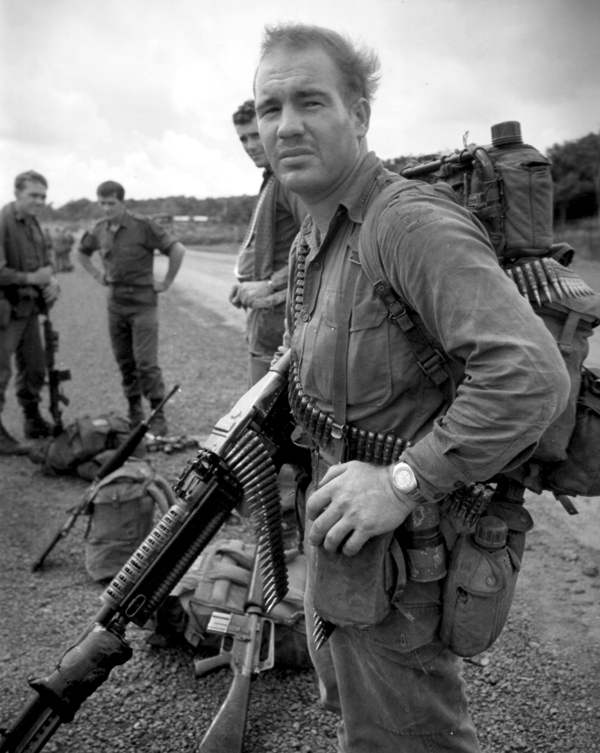
The Second Indochina War, the Vietnam conflict, or more commonly known as the Vietnam war, was a Cold War military conflict that occurred in Vietnam in 1959. The conflict depicted the north communist Vietnamese, supported by communist allies, against the South Vietnamese, supported by the Americans and other non-communist nations. The United States entered the war as part of their containment strategy. The Americans also feared that the domino theory would take place: if one Southeast Asian country fell to communism, the neighboring countries would follow suit.
The Vietnam conflict started back in 1945, where the French controlled the French Indochina, now called Vietnam. Ho Chi Minh, the leader of the resistance movement called the Vietminh, publicly declaring Vietnamese independence in hope to drive the French out of the country. However, the French had no intention of leaving Vietnam and soon regained control of the cities and southern half. Ho Chi Minh vowed to fight back from the North to regain the South from French control.
In 1956, Minh gained popularity as a war hero from the Japanese in WWII and support from peasants, and the United States sensed that he would win the next election. The South Vietnamese President, Ngo Dinh Diem, a strong anti-communist, refused to take part in the upcoming countrywide election. Diem promised to hold a stable government in the South, and the Americans continued to supply aid. Diem, however, was unable to hold his end of the bargain and ushered a corrupt government that suppressed any opposition and issued no land to the peasants. By 1957, a Communist opposition group in South Vietnamese, the Vietcong, began to attack the Diem government. Ho Chi Minh supported the group and supplied arms. As the rebellion stepped up their guerrilla warfare tactics, the South grew more unstable. Furthermore, Diem’s popularity plummeted because of ongoing corruption and failure to respond to reforms. Not long after, Diem was assassinated. It was time for the U.S. to take action.
More than 500,000 soldiers were drafted and sent to Vietnam. The U.S. suffered from heavy losses as the soldiers were unprepared for the guerilla warfare tactics used by the Vietminh army. It was inevitable that the U.S. would eventually fall as tension heated up back in America. Because of unfavorable protests, the former president Nixon was forced to withdraw the U.S. forces. Vietnam and the neighboring countries fell to communism.
Eisenhower's Presidency
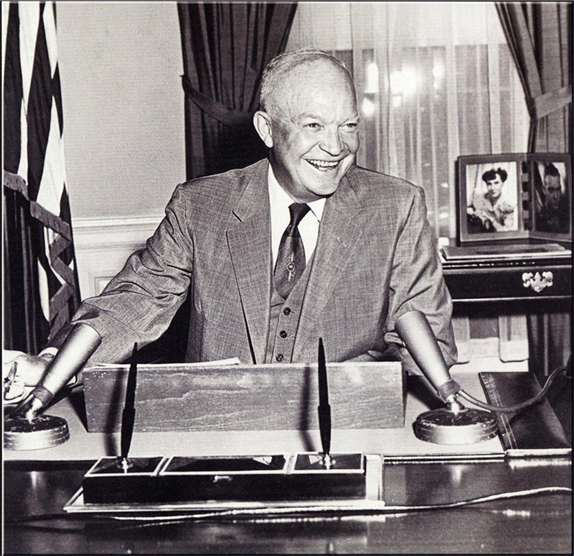
As Eisenhower entered the presidency, and his running mate, Richard Nixon, took office as Vice President, it became clear that the new administration would take a new approach to government. Eisenhower’s “dynamic conservatism,” or “Modern Republicanism,” was a middle-of-the-road approach involving fiscal conservatism and social liberalism. Among his accomplishments in the domestic arena were balancing the budget, cutting taxes, and raising the minimum wage. He also extended Social Security and unemployment benefits, increased funding for public housing, and played a part in the formation of the Department of Health, Education, and Welfare.
The fiscal responsibility and social reform of the Eisenhower administration ushered the 
Eisenhower’s “reign” was not absolutely successful. Despite the relative comfort of the middle class, the urban poor witnessed little improvement in quality of life, partly because of the fact that middle and upper class Americans flocked to the suburbs, leaving cities unbalanced and poor. Furthermore, Eisenhower did little to promote civil rights. In the Cold War, Eisenhower focused on the development of nuclear weapons, following a policy of brinkmanship, and he issued the Eisenhower Doctrine in 1957, pledging to defend the Middle East against attacks from communist countries. His failure to focus on a space program, however, provoked fears that the Soviet Union would overtake the
Bad times

Bad times
In the early 1940s that time period was the worst for many colored people, colored people could do very few things in their towns. Many white people did not accept colored people in their towns and schools. As everybody knows that in 1960 segregation divided the nations people into two, it was something that was right most whites eyes back then, but it was never right to a colored person. Many colored people tried to prevent this by doing many thing such as bus boycotts and also the long walk to Montgomery. Rosa Parks names comes too mind when you hear the word bus, She was a strong colored women who had to finished a hard day of work and she would not give up her seat to a white man. This begins the Bus boycotts because that day county police arrested Rosa Parks. This action put hope and into many colored peoples eyes. The man that gave everybody hope was Dr. Martin Luther king jr a Baptist Church pastor to lead the boycotts and also the most affective civil rights movement “ well I’m not sure I’m the best person for the position” “ but if no one else is going to serve I’d be glad to try.
The civil rights movement gave colored people the hope to live the American dream. That all men are created equal and it’s not about the color of are skin but it is by the content of our character
Vietnam War


The Vietnam War was a major conflict between two extreme systems of government. The two opposing sides were the communist Soviet Union and the democratic United States. The United States supported the southern Vietnamese while the Soviet Union supported the Northern Vietnamese. This is the first war the United States has ever been in where they can’t distinguish the citizens from the soldiers. This was also the first all guerilla warfare war between two major powers. Although the Soviets never sent many troops to aid the Northern Vietnamese they spent a lot of money sending supplies and weapons to the communist allies. As the war progressed it became clear that there were too many advantages against the US and a victory was impossible with out keeping it moderately humane. The factor that made it clear as to why victory was impossible was the Viet Cong; a private supporting communist army made up of citizens that used deadly guerilla warfare against the anti-communist US. During the war, at home people felt that if the people of Vietnam wanted to become communist then let them, they shouldn’t be sending US citizens to fight for politically security of democracy. The war was quickly and cleanly ended by the retreat of the entire US army on April 30th, 1975.
FDR and the Holocaust


The early 1940s was a rough period of time throughout the world. Amidst a social and ethnic purification in Germany, millions of Jews, Gypsies, mentally handicapped, and more were put to death because of their religious beliefs or physical “shortcomings.” Concentration camps were used for mass murders and slave labor. The conditions in these camps were horrid, and many died not by execution, but by the dreadful standards of living at these camps. Disease and starvation were also rampant among the prisoners. The German’s best kept secret, very few outside the Nazi regime were aware of the atrocities that occurred at these death camps.
Meanwhile, across the Atlantic, FDR was re-elected for his third term. One of the privileged few who knew about the death camps, FDR had the ability to stop these death camps by simply bombing the railroad tracks that took prisoners to the camps. It was well known that FDR was anti-Semitic, but it was still shocking to American citizens when it was revealed that, despite prior knowledge, nothing was done to stop the flow of prisoners into the camps. Some believe that FDR did not get involved because of strong anti-Jewish beliefs on the home front. He did not want to go against the public beliefs, so he decided not to act.
Along with ignoring the death camps, FDR would often order immigration officers to not allow in Jewish immigrants who escaped persecution in Europe. In 1939, the SS St. Louis docked in Cuba, filled with Jewish immigrants. However, they were not allowed entrance into the United States and were forced to return to Germany. Known as the “Voyage of the Damned,” the SS St. Louis was forced to return back to Germany, where all but 365 of its passengers were executed. At first, FDR allowed Jewish immigrants to flee to the United States, but only in small numbers. By the time he had stopped, over 100,000 had emigrated to the United States. However, while knowing of the camps, he suddenly disallowed all emigrations to the United States by refugee Jews.
Despite his political prowess in office, FDR made some very critical errors during his presidency. Due to his ignorance of the Jewish plight in Europe, over 6 million were executed. These numbers could have been drastically reduced had he taken action to stop them. Unfortunately, he did not want to be looked at badly by the public eye, and did nothing. For his lack of action, he will be forever remembered not by his political successes, but by his critical flaws.
By: Yotam and Jonas
McCarthyism

McCarthyism is a term that was named after Wisconsin Senator Joseph McCarthy. McCarthy was a prominent public figure in the early 1950's. At that time, known as the Red Scare, people were afraid that communism was going to take over the world. McCarthy gained attention by claiming that he had a list of Soviet spies in the United States government. However, he never provided any evidence for his accusations. For a few years, he continued to accuse people of being communist without giving any evidence. Despite this, many people believed him. Some of the accused were imprisoned, but even those who were not suffered. No one wanted to hire a communist, so many people accused lost their jobs and had their careers destroyed. McCarthy mainly targeted government employees, union activists, educators, and those in the movie industry. In 1954 McCarthy accused the army of being communist, which led to a highly publicized case about it. This made McCarthy lose support and popularity.
Since then, the term has expanded to envelop more than simply the actions of Joseph McCarthy. It can also be used to describe other unjustified accusations of communism during the 1950's. For example, the House Committee on Un-American Activities formed a Hollywood blacklist, which listed all of the Hollywood actors who they suspected were communist.
Today, McCarthyism is used in an even more general way. It can be used to describe many actions, from making badly supported accusations to questioning a person's patriotism to accusing someone of being disloyal in order to pressure them to conform.
~By Erin M
Rosa Parks

We've all seen this picture. If not you've probably heard of this woman. Her name is Rosa Parks, and she did a lot for civil rights. Not through violence or force, but by simply sitting down. In the 50s, there were strict segregation laws. Whites and blacks didn't use any of the same facilities. They were always separate but rarely equal. Blacks had to sit on the back of the bus, while whites could sit in the front.
On December 1st 1955, Rosa Parks got into the bus and sat down. A white man later entered the bus expecting her to give up her seat for him, but she didn't. This sounds like a petty argument now, but in those times it was considered a serious act of civil disobedience. The bus driver threatened to call the police, but she didn't care. She stayed in her seat and was later arrested. She was hated by the supporters of segregation, and her whole family faced the consequences. She was aware of the hardships she would face, but knew it was worth in the long run.
She had a lot of support, and inspired a boycott against riding the bus. African Americans all over Alabama refused to ride the bus. A large percentage of those riding the bus were black, so this infuriated the bus companies. The boycott lasted a whole year, and added momentum to the already growing civil rights movement.
She became very famous and went on to win awards. She got a lot of support by Dr. Martin Luther King for her nonviolent protest as well as several feminist groups for her bravery. 5 years ago, she died at the age of 92, but will always be remembered.
Space Programs in 1960's

In the 1960's many thought that the US was far behind the Soviet Union in terms of space innovations, but actually we were not that far behind. Spy satellites already existed around our globe. This information was not released to the public giving everyone a sense of lagging. Kennedy, wanting to keep up, decided that on May 5th he would send Alan Shepard to be the first American in space followed by John Glenn who was the first to orbit the globe in 1962. The space race between the Soviet Union and America became a vital competition for Kennedy and those who would follow. Kennedy began to search for advisors to come up with space programs to further research. The soviet presisted to fight and continued to be one step ahead of the United States. As this occured NASA became close to establishing a system in which the orbiting ship could change its orbit midflight. This was something that the Soviet Union had not even thought about.
In 1967 both the Soviet Union and Americans emerged with progrmas to send humans to the moon. In 1967 the crew of the Apollo 1 was sent in what ended up being a fatal mission. Fire swept through the cabin sending out a mission that would not return. The soviets also suffered some losses with their first mission. Soyuz 1, likewise was plagued with malfunction creating an unsuccessful mission. In 1969 Kennedy launched apollo 11 with out disappointment. 4 days later Armsrtong and Allen landed on the moon. A success for the United States had been achieved and put us far ahead infront of the Soviet Union. This furthered not only space research but scientific advancements as well. It set the stage for continual space exploration for the future. In later year the United States would have explored other planets as well as further research on the moon.
Seeds of Change
Seeds of Change

The whole civil rights movement could have not occurred. If only the Civil Rights Act of 1875 had remained in force, segregation would have remained illegal and Martin Luther King Jr.’s (to the left) legacy would be quite different. Instead, though, the all white Supreme Court ruled the act unconstitutional in 1883, creating the whole problem.
During the 1890s, African American civil rights were severely limited, and in Louisiana the law was created, saying railroads needed to provide “ equal but separate accommodations for the white and colored races.” The universally known case then came upon the Supreme Court, Plessy v. Ferguson, and the court determined that “separate but equal” was not in violation of the four
teenth amendment. This armed all those who wanted to be armed with ammunition to segregate and discriminate.
In the South, this was first exhibited by the Jim Crow laws, which aimed at separating the races. Forbidding marriage between blacks and whites was only the tip of the iceberg. Many other restrictions were enforced on social and religious interactions between races. Signs were posted everywhere in the south saying “Colored Water”; “No Blacks Allowed”; “Whites Only!”.
During the beginning of the 20th century, African Americans sought refuge in the North. Instead, they only found more segregation and discrimination. Through the beginning Second World War, plots to strike back sweltered within the African American community. World War 2 brought an unexpected blessing, however, and many jobs were opened for African Americans due to labor shortages. Additionally, almost a million African Americans served in the armed forces, which ended discrimination to

get enough men. The war also brought reform from the President, ending discrimination by federal agencies and all war related work in the United States.
The NAACP, an organization formed in 1909, headed the desegregation campaign. It was formed to end segregation. It took a legal strategy, in which they sought to show the inequalities between separate schools that should have been “equal”. In 1938, Thurgood Marshall (to the right) became the head of the NAACP, and under his leadership the NAACP would win 29 out of their 32 Supreme Court cases.
These cases slowly started chipping away at Plessy v. Ferguson. In 1946, Morgan v. Virginia interstate bus seating segregation was mandated to be unconstitutional. In 1950, Sweatt v. Painter ruled that state law schools must admit black students, even if separate black institutions existed. These were only the first step forward in a long line of wins for the NAACP and the civil rights movement.
By Benjamin and Andrew
Japanese Internment Camps

During World War II, the Japanese attacked Pearl Harbor in Hawaii, which made citizens scared that Japan would soon attack the United States. This produced tragic results for Japanese American because frightened citizens soon began to suspect that the Japanese Americans would help their country and attack from the inside. In 1942, the War Department called for the mass evacuation of all Japanese Americans in Hawaii. General Delos Emmons stopped this because 37% of the people in Hawaii were Japanese Americans and evacuating them would destroy the economy in Hawaii. Soon, however, 1% of the Japanese American population in Hawaii (1,444 people) was forced into internment camps.
Internment did not stop in Hawaii. On the West Coast, prejudice began too grow. On February 19, 1942, President Roosevelt sign an order requiring the removal and relocation of all Japanese Americans in California and parts of Oregon, Arizona, and Washington. Two-thirds of the people rounded up were Nisei (second generation Japanese, born in America). Many Nisei joined the armed to fight in World War II and did not have to go to the Internment Camps. No charges were filed on the Japanese Americans, but they were forced to sell their homes, businesses, and all their belongings for less than their value.
Many Japanese Americans fought for their freedom with no luck. After the war, however, the Japanese American Citizens League pushed the government to return the belongings of all those sent to the camps. Congress authorized the spending of $38 million for the cause ( less than a tenth of their actual losses). In 1978, payment of reparations for each individual that went to the camps was paid and in 1988, every Japanese American that was relocated was paid $20,000.
In the end, what was done to the Japanese Americans was a nation embarrassment and, hopefully, was a good learning experience for America as well.
-Alice W
FDR and the Holocaust
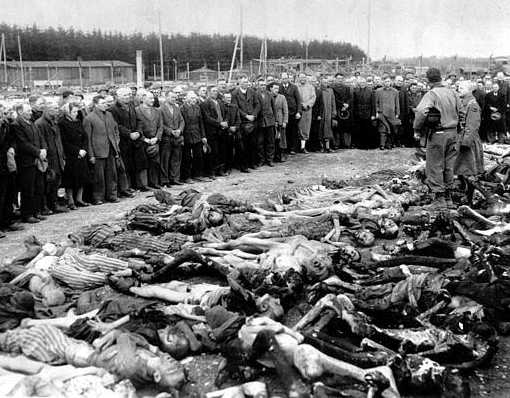
The holocaust is a term that is used to describe the genocide in Europe during World War 2. Eleven million people died in the holocaust and around six million of them were Jews. The holocaust started in Nazi Germany and was lead by dictator Adolf Hitler. Hitler and the Nazis used Jews as a scapegoat, blaming them for Germany's past failures. As Nazi control grew across Germany, they started creating new laws that stripped Jews of their Germany citizenship, jobs, and property. Hitler believed that Aryans were a "superior race", and became obsessed with ridding the world of all other races and religions. He started moving all of the "non-Aryans" into Ghettos which separated them from the the rest of society. As Hitler's obsession grew, he started moving them into Concentration camps where they were kept as slaves, then taking to extermination camps where they were killed by mass shooting or gas chambers.
A lot of people knew what was happening in Europe but nobody did anything because they were scared of their governments or the Anti-Semites. FDR wasn't doing much as well because a lot of the people in the world at that time were Anti-Semites and he was scared to loose the support he had by helping the Jews. There were a lot of Jews trying to escape to countries that were not controlled by the Nazi government, but many nations would not take in so many refugees. Eventually FDR let 100,000 Jewish refugees into the United States, but because it was at the time of the Great Depression, Americans were afraid that if they let too many refugees into America, there would be less jobs for citizens.
The Holocaust was a tragic event, and would never have gotten as far as it did in the time period we're in now.
-Cory and Ofri
McCarthyism
McCarthyism

The most famous anti-Communist activist during the Red Scare was Senator Joseph McCarthy, a Republican from Wisconsin. My January 1950, he had a reputation as an ineffective legislator and had to pick a winning issue that would get him reelected in 1952. He chose to claim that communists were infiltrating the government.
McCarthy made many unsupported accusations, such as claiming that there were hundreds of Communists in the State Department without producing a single name. He also accused the Democratic Party of “20 years of treason”. The Republican Party did little to stop McCarthy because they believed they would win the 1952 presidential election of the public saw them purging the nation of Communists.
However, when McCarthy made accusations against the US Army, it resulted in a nationally televised Senate investigation. His bullying of witnesses alienated the audience and cost him public support. The Senate condemned him for improper conduct that “tended to bring the Senate into dishonor and disrepute”. Three years later, an alcoholic McCarthy died a disgraced and broken man.
To this day, the unfair tactic of accusing people of disloyalty without providing evidence is known as McCarthyism.
By: Derek Nielsen and Aston Sun
Vietnam War


This war was between communist North Vietnam and South Vietnam. The war was fought between 1964 and 1975. The United States joined the war to help South Vietnam fight communism. This was a part of the US trying to desperately contain communist. The war took place on the grounds of South Vietnam and in bomb runs over North Vietnam. The Vietnam War was part of a larger conflict between neighboring countries of Cambodia and Laos known as the Second Indochina War. About three million American men and women were went to fight in this war. North and South Vietnam fought through guerrilla warfare. The South Vietnamese and the US relied greatly on air superiority and firepower to destroy North Vietnamese operations. The North leadership ordered the vietcong to not pitch fights with the US, instead they were ordered to do hit and runs and more ambushes. The US had spotter planes everywhere and so it was very important to the vietcong to hide their bases in swaps and remote areas. 58,148 Americans died in this war and about 500,000 North Vietnamese died.
Petra
The Kennedy Administration
 The Kennedy Administration came into power in January 1961. It was a relief for Kennedy to step onto the presidential scene. Loved by many, Americans ever where were ready for the change he was going to bring. His democratic views on foreign and domestic policies is what put him in the win rather than Nixon. Kennedy was sworn in as the 35th president in January 1961. His inaugural address he spoke to the American people to reassure them of everything and famously told the American people "Ask not what your country can do for you; ask what you can do for your country." He also asked the nations of the world to join together to fight what he called the "common enemies of man: tyranny, poverty, disease, and war itself." In closing, he expanded on his desire for greater internationalism "Finally, whether you are citizens of America or citizens of the world, ask of us here the same high standards of strength and sacrifice which we ask of you. His assassination in 1963 upset millions and the loss of J.F.K. was overwhelming. Thankfully the American people morned over it and their new president Lydon Baines reassured the American people that it would be OK once again.
1950s Culture and the American Dream

The postwar economic boom allowed Americans to indulge in automobiles, new products, homes, and many other things, creating a culture unique to the 1950s that defined much of America's current status today.
Business, for one, began to change. More and more men switched over to white collar jobs rather than blue collar jobs. Men who worked in the cities were able to provide a safe, financially secure lifestyle for their families in the suburbs while traveling to work in the latest model of automobile.
The rise of the automobile embodied an essential part of the American Dream. Consumerism and materialism became the goals of many middle class American families. Since more and more people were purchasing automobiles, the interstate highway system was put into place. The access to mobility allowed for new job opportunities in food businesses, shopping malls, gas stations, and drive in movies.

The role of women was very limited in the 1950s. They were expected to be stay home mothers and raise a good family, while their husbands worked in the cities and provided the income. Advertisements and television shows portrayed women as content, clean, organized, and up to date with the latest kitchen appliances.
Though consumerism and materialism allowed for economic growth and recovery from the Great Depression, there were some consequences to many people's perception of the perfect life of the American Dream. For example, the increased usage of the automobile not only created noise and accidents, but also was detrimental to the environment and further increased the gap between middle class Americans and those living in poverty. Furthermore, the American Dream prevented much diversity and individuality among families and businesses. The conformity of the 1950s caused rebellion in teens and other young people reflected the new age of rock 'n' roll and the 1960s.
April - Poetry Month
The Gunn Library is sponsoring an exhibit of poetry in April. We would like to display your Holocaust poems as part of the celebration of National Poetry Month. If I do not hear from you by March 26, I will assume that you consent to the display of your poem.
Thank you for helping to make Gunn's poetry month a SUCCESS!
Thank you for helping to make Gunn's poetry month a SUCCESS!
Monday, March 22, 2010
Rosa Parks
Jesus Guillen
ROSA PARKS
Even before the famous bus incident Rosa Parks protested segregation through everyday acts. She refused to drink from drinking fountains labeled “colored only”. Instead of using the segregated elevators she climbed the stairs instead. A workshop designed to promote integration by giving students the experience of interracial living influenced her daily life tremendously.
Rosa Parks was a true hero who fought for her beliefs and did not give up easily. She was a brave NAACP officer who on December 1,1955, displayed her bravery by taking a seat in the front row of the colored section of a Montgomery bus that she had every right entitled to. Rosa Parks was tired of giving up to the whites and wanted change, a true revolutionary. She was ordered along with three fellow African-American passengers to empty the row so that a white man could sit down without having to sit next to any African-Americans. Whites often treated blacks harshly which was expected to change after the Supreme Court Brown decision. However as this incident proved, the whites were not going to change their views of the blacks quickly. The bus driver then threatened to call the police, but Rosa would not budge.
The news of her arrest traveled as quickly as wildfire, catalyzing the anger inside many fellow African-Americans. Her arrest led for Jo Ann Robinson and NAACP leader E.D. Nixon to organize a bus boycott. In order to organize the boycott people from the African-American Community formed the Montgomery Improvement Association. The leader for the association became none other than the great Martin Luther King Jr. Without Rosa Park’s actions African-Americans may not have received their rights until much later and the great Martin Luther King Jr. may never had been as great as he became.
ROSA PARKS
Even before the famous bus incident Rosa Parks protested segregation through everyday acts. She refused to drink from drinking fountains labeled “colored only”. Instead of using the segregated elevators she climbed the stairs instead. A workshop designed to promote integration by giving students the experience of interracial living influenced her daily life tremendously.
Rosa Parks was a true hero who fought for her beliefs and did not give up easily. She was a brave NAACP officer who on December 1,1955, displayed her bravery by taking a seat in the front row of the colored section of a Montgomery bus that she had every right entitled to. Rosa Parks was tired of giving up to the whites and wanted change, a true revolutionary. She was ordered along with three fellow African-American passengers to empty the row so that a white man could sit down without having to sit next to any African-Americans. Whites often treated blacks harshly which was expected to change after the Supreme Court Brown decision. However as this incident proved, the whites were not going to change their views of the blacks quickly. The bus driver then threatened to call the police, but Rosa would not budge.
The news of her arrest traveled as quickly as wildfire, catalyzing the anger inside many fellow African-Americans. Her arrest led for Jo Ann Robinson and NAACP leader E.D. Nixon to organize a bus boycott. In order to organize the boycott people from the African-American Community formed the Montgomery Improvement Association. The leader for the association became none other than the great Martin Luther King Jr. Without Rosa Park’s actions African-Americans may not have received their rights until much later and the great Martin Luther King Jr. may never had been as great as he became.
Wednesday, March 10, 2010
The Tuskegee Airmen
The Tuskegee airmen were African American men who learned to fly fighter planes. The route to get there was very hard, if you did not have the qualifications you were let go from the institute of flying. To distinguish themselves from every body else they gave themselves names of the packs. These brave men fought in Italy and they were apart of the all black 99Th pursuit squadron. These airmen contributed great, when in Sicily, the squadron put in there first victory against the enemy aircraft. They went on to do even more impressive war tactics strikes. You Could say that the Tuskegee airmen were great hero's of the war because they did not join the war because they had to, they did if because it was the right thing for this country. I feel that these men were a good reason why we had some many victory's in war in that time period. 
Tuesday, March 9, 2010
Japanese Concentration Camps in America By: Diane
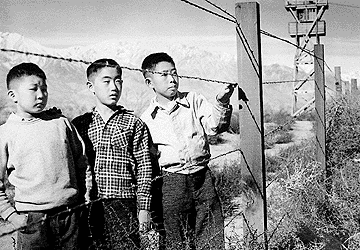
The internment of the Japanese resulted from the bombing of Pearl Harbor. Over 100,000 Japanese, most of whom were actually citizens of the United States, were relocated to various camp sites in the western part of the United States.
The relocation occurred during FDR's presidency during World War II as an act by Congress. Many of the Japanese put into these concentration camps were not of full Japanese decent. Some of them had grandfathers or aunts and uncles that were Japanese. The prejudice turned to discrimination and injustice.
When the Japanese were relocated, all were forced to give up their businesses, homes, shops, farms, and property. They could not take much to the concentration camps. At the camps, many of the families were separated. Food, water, shelter, and clothing mostly consisted of army surplus and was of very low quality. Some young men signed up for the United States Army as Japanese to escape the camps.
It was very hard for the Japanese to rebuild the lives that they had left behind after being freed from the internment camps. It would take and estimated 50 years for them to regain and earn the equivalent of what they had earned. Since their property and businesses had been left for grabs, the Japanese had nothing when they were released and had to start all over again.
The internment of the Japanese portrays that even a country of 'freedom' can act upon prejudice and discrimination in a negative way.
Subscribe to:
Posts (Atom)