Even though American women did not serve in the armed forces in World War II, their contributions to the war effort were pervasive and vital. As many young men had left the country to fight, women took over their roles in factories and noncombat army positions.

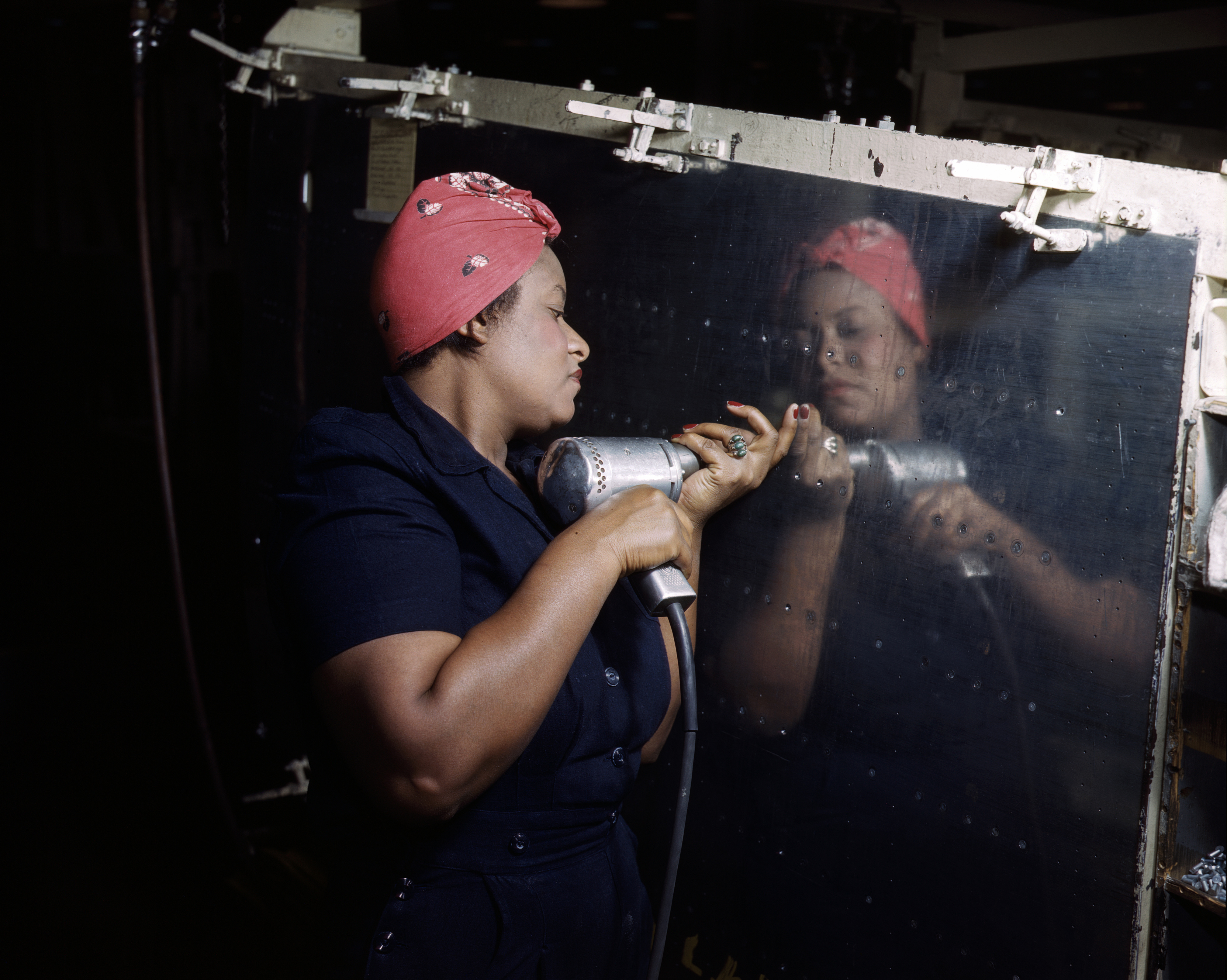
During World War II, many women took positions in war industries. Initially, the industries doubted that women had adequate stamina for factory work. They were proved wrong–factory employers grew to prefer women to men because they could perform the duties men could at only 60% of the salary men received. This discrimination did not deter women worker—in fact, over six million women contributed to the war effort as laborers in war industries.
The
While there was no question as to the competence and commitment of WAAC workers, they were only given an auxiliary status, which granted them the same salary as serving men, but fewer benefits. American women were so dedicated that in spite of this discrimination, three-hundred-and-fifty-thousand (350,000) women served in the WAAC and other auxiliary branches in the war effort. After thirteen (13) months of granting incomplete benefits to WAAC workers, the
During the war, women proved invaluable as laborers in war industries and as service people in noncombat positions. Despite discrimination in the form of reduced benefits and diminished salaries, women remained dedicated to the cause and viewed the war as an opportunity to combat this discrimination by proving their ability as workers. While women by no means received gender equality after the war, they received some of the respect they deserved through tireless struggle and hard work.

By Vivek C. and Jesus G.
